Meet Dr Inês Serra: 1st Place Poster Winner at IPIC2025

,

Among this year’s outstanding abstracts, three winners were selected to receive special recognition at IPIC2025, with a certificate, a grant, and the opportunity to present their work during a dedicated session. We congratulate Dr Inês Serra on achieving 1st place with her work,Analysis of Genetic Overlap Between Inborn Errors of Immunity and Neurodevelopmental Disorders.” Her research offers valuable insights into the genetic links between immune function and neurodevelopment, and we are proud to celebrate her exceptional accomplishment.

Thank You and See You in Mallorca!

,

We extend our heartfelt thanks to everyone who made IPIC2025 an unforgettable success!

With over 900 attendees, IPIC2025 was a truly inspiring gathering of our global community—filled with learning, collaboration, and shared commitment to advancing care for people with primary immunodeficiencies.

As we close this remarkable chapter, we are already looking ahead with excitement to our next congress: IPIC2027, taking place in beautiful Mallorca, Spain, from November 3–5, 2027.

In 2027, our congress will elevate primary immunodeficiency care as we learn, connect, and make lasting memories on the vibrant island of Mallorca.

Thank you once again for your continued support and engagement. We can’t wait to welcome you to Mallorca in 2027 for what promises to be another milestone event for the PI community. Until then, stay connected—and keep the spirit of collaboration alive!

🎥 Relive the highlights of IPIC2025 by watching our recap video here.


IPOPI Applauds EMA’s Positive Opinion on Waskyra™ for Wiskott-Aldrich Syndrome

,

IPOPI has welcomed the positive opinion issued by the Committee for Medicinal Products for Human Use (CHMP) of the European Medicines Agency (EMA). The opinion recommends granting marketing authorisation in the European Union for Waskyra™, a groundbreaking ex vivo gene therapy for Wiskott-Aldrich Syndrome (WAS), a rare and life-threatening primary immunodeficiency.

“This marks a significant milestone for gene therapy in the European Union, offering new hope for patients with Wiskott-Aldrich Syndrome,” said Johan Prévot, Executive Director of IPOPI and Board Member of the AGORA Foundation. “This positive opinion will not only increase access to life-saving therapies for those affected by WAS but could also pave the way for the development of more innovative treatments for other primary immunodeficiencies and rare disorders,” added Martine Pergent, IPOPI President. For more information, see here.


IPOPI’s 2024 Review of Activities and Achievements

, ,

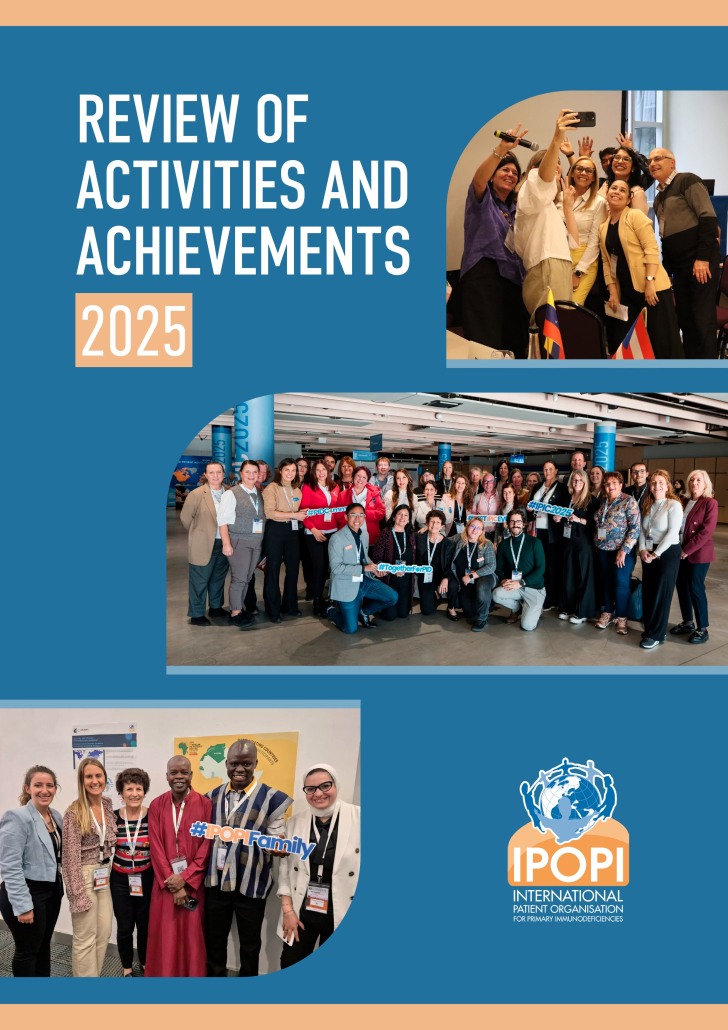
In 2024, IPOPI continued to bring the global PID community together — connecting patients, experts, and advocates across 75 countries to improve lives and drive progress in care and diagnosis for people with primary immunodeficiencies (PIDs).

Highlights included the XVIII Global Patients’ Meeting in Marseille, new advocacy initiatives on plasma access and newborn screening, and the launch of our Research Grant Programme. IPOPI also embraced digital transformation and explored how artificial intelligence can shape the future of rare disease management.

As we look ahead, IPOPI remains committed to empowering patients, supporting our National Member Organisations, and driving equitable access to diagnosis and treatment worldwide.

Together, we continue to build a stronger, more connected global PID community.

We hope you will enjoy reading this annual report, which highlights the most significant IPOPI initiatives, campaigns, and events in the previous year.

Explore the annual review


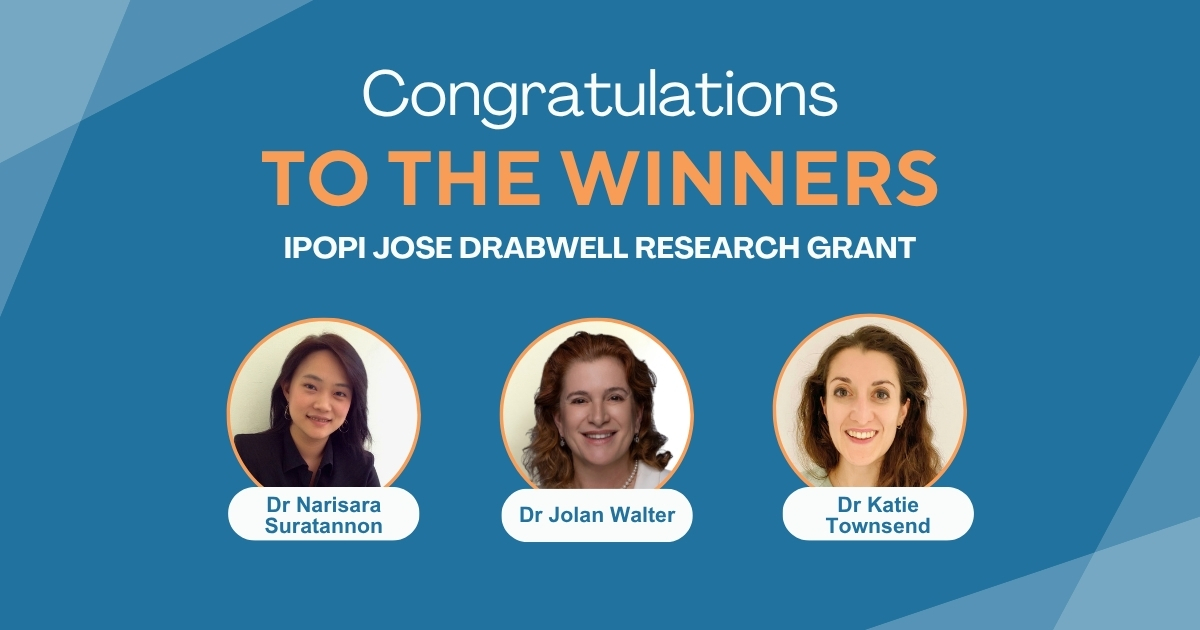
The IPOPI Jose Drabwell Research Grant Programme Winners
,

The IPOPI Jose Drabwell Research Grant Programme is an initiative aimed at promoting scientific and clinical research in the field of primary immunodeficiencies.

The second grant call in 2025, supported by Grifols and Kedrion, ran from April to August, inviting applicants from around the world to seize the opportunity to fuel innovation in the field with patient-centred and knowledge-generating projects.

IPOPI is pleased to announce the winners of the IPOPI Jose Drabwell Research Grant Programme 2025, who will benefit from funding for 2 years to carry out the following projects:


  • Nguyen Thi Thanh Hiep

Affiliation: University of Medicine and Pharmacy, Ho Chi Minh City, Vietnam

Project Title: Evaluation of the diagnostic value and the correlation between TREC, KREC concentrations and lymphocyte counts in pediatric patients suspected of inborn errors of immunity

📌 This project evaluates whether measuring TREC and KREC levels can serve as cost-effective tools to support early screening and diagnosis of inborn errors of immunity in Vietnamese pediatric patients.


  • Dr Zuzana Parackova

Affiliation: Department of Immunology, Faculty Hospital in Motol and 2nd Faculty of Medicine, Charles University, Prague, Czech Republic

Project Title: METSTAT: Metformin as a Novel Immunomodulator in STAT1 Gain-of-Function Interferonopathy

💊 This project will test whether the widely used drug metformin can be repurposed to safely improve immune function and quality of life in patients with the rare disorder STAT1 gain-of-function.


  • Dr Helen L. Leavis

Affiliation: University Medical Center Utrecht, Department of Rheumatology and Clinical Immunology and Center of Translational Immunology, Utrecht University, Utrecht, The Netherlands

Project Title: European multicenter diagnostic trial of CVID enteropathy

🔬 This project will establish a multicenter cohort of CVID patients to develop and validate diagnostic tools for CVID-associated enteropathy, aiming to improve early recognition and guide safer, more effective treatments.


  • Prof Nicolette Nabukeera-Barungi

Affiliation: Department of Paediatrics and Child Health, School of Medicine, College of Health Sciences, Makerere University, Kampala, Uganda

Project Title: Improving Access to Quality Care for Inborn errors of immunity Using Low-Cost Techniques at Mulago National Referral Hospital, Uganda

🌍 This project in Uganda aims to improve early detection and care for children with inborn errors of immunity by implementing screening techniques, training healthcare workers and caregivers, and collecting baseline prevalence data through a national referral hospital study.


We wish the winners the best of luck and success on these projects and would like to thank everyone who applied.