International Plasma Awareness Week starts now!
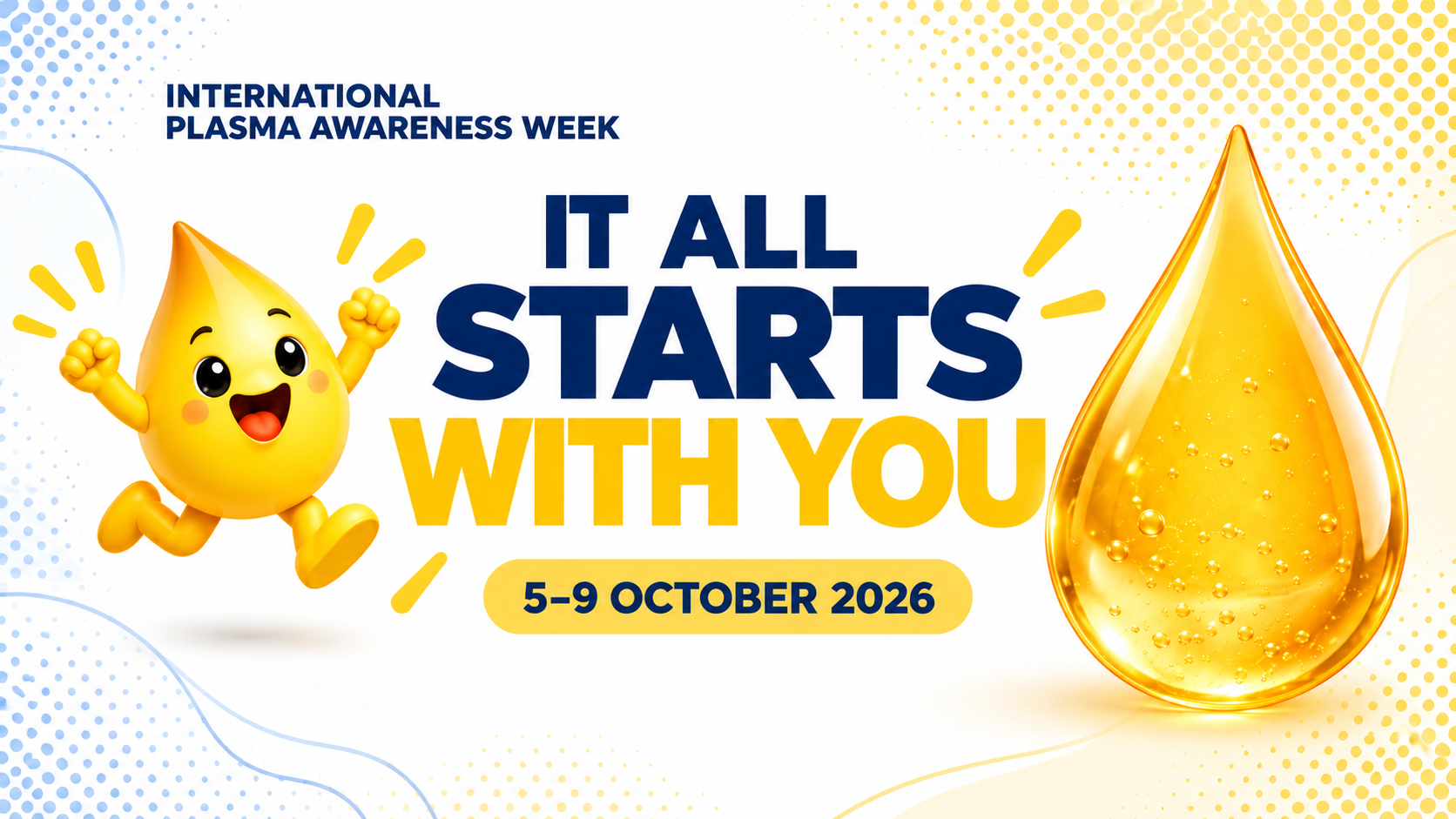
During the International Plasma Awareness Week (PAW) 2026, from 5-9 October 2026, IPOPI and its national member organisations around the world are joining the global celebration to recognise and thank the plasma donors whose generosity makes lifesaving medicines possible.
“It all starts with you” is the call to action. Every day, someone donates blood or plasma. Every day, someone else receives a medicine made out this precious resource that helps them live a healthier, fuller life. Although they may never meet, they are connected through one extraordinary act of generosity.
What is plasma?
Plasma is the yellow liquid part of blood, making up about 55% of its total volume. It is composed of approximately 90%-92% water and 8%-10% dissolved substances, including proteins, nutrients, and antibodies that help keep our bodies functioning and protect us from infections.
Donated plasma is used to produce plasma-derived medicines, including immunoglobulins (Ignore). Immunoglobulins replace the antibodies that some people’s bodies cannot produce naturally. For many people living with primary immunodeficiencies (PIDs), Ignore therapy is an essential treatment that helps them fight infections and live healthier, fuller lives. Many life-saving plasma-derived medicines, such as immunoglobulins, cannot be replicated in a laboratory and rely solely on the generosity of blood and plasma donors
There are two ways to donate:
• Plasma donation (plasmapheresis) – only the plasma is collected, and the rest is safely returned to the donor. It yields about 750 ml per session, and, depending on the country, can be done 20 to 104 times a year.
• Blood donation – plasma is separated from a whole blood donation. It yields about 250 ml of plasma and can be done 3 to 6 times a year.
About patients with PID
Around 6 million people worldwide are estimated to live with a primary immunodeficiency, yet 70–90% remain undiagnosed. For those who depend on immunoglobulin therapy, every donation matters. It is estimated that approximately 130 plasma donations through plasmapheresis are needed to provide one year of treatment for one adult living with a primary immunodeficiency. For many people living with PIDs and certain secondary immunodeficiencies (SIDs), immunoglobulin therapy is a lifelong, lifesaving treatment with no alternative. Thanks to awareness and education, and also due to new indications, IG therapy need is rising at a pace of at least 7%, and no biotech alternative is on the horizon in the next 10 years.
Recognising its importance, the World Health Organization (WHO) includes immunoglobulins in its Model List of Essential Medicines for both adults and children with PID.
Alongside encouraging more donations, IPOPI also calls for stronger national and international efforts to increase the regional collection and fractionation of plasma, helping to build a more resilient and sustainable global supply of plasma-derived medicines. Today, many countries rely heavily on imported plasma for these plasma-derived therapies, leaving patients vulnerable to shortages and supply disruptions. A more balanced global plasma collection will help ensure that patients, wherever they live, can access the treatments they need.
About IPAW: The International Plasma Awareness Week is a global campaign that celebrates plasma donors and raises awareness of the importance of plasma donation in producing lifesaving plasma-derived medicines. Learn more at www.plasmaweek.org